平行軸ヘリカルギア ― 平行軸システム向け高速高負荷伝動装置

Parallel axis helical gears transmit motion and torque between two parallel shafts through involute helical tooth pairs. Korea Ever-Power supplies modules M1 through M12 in C45 steel, alloy steel, brass, aluminum, stainless steel, and POM. Precision grades DIN6–DIN9, teeth treatment options including hardened, milled, or ground.Applications span CNC automation, semiconductor equipment, medical devices, machine tools, parking systems, and high-speed rail.
Parallel Axis Helical Gears — Overview
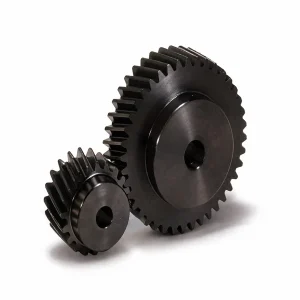
Parallel axis helical gears are a subset of the broader ヘリカルギア family specifically designed so that the two mating gears share a pair of parallel rotation axes. Unlike crossed ヘリカルカットギア — where the shafts run at an angle to each other — parallel axis helical gears keep both shafts running in the same plane and direction, enabling efficient line contact between meshing teeth. The teeth are cut at a helix angle to the axis of rotation, so engagement begins at one edge of the tooth face and travels diagonally across the face width as the gears rotate. This progressive contact spreads the load over a longer arc than a spur gear tooth pair, which reduces the instantaneous load per unit of face width and produces noticeably smoother, quieter transmission even at high speeds.
The key engineering distinction between parallel axis and crossed helical configurations lies in the contact geometry: parallel axis gears develop line contact that transitions to area contact as tooth pairs come fully into mesh, giving them substantially higher load capacity than crossed helical arrangements, which maintain only point contact throughout engagement. For heavy loads, high torques, or continuous-duty cycles, parallel axis helical gears are the standard choice in industrial gearboxes. Korea Ever-Power Worm Gear Co.,Ltd manufactures these gears from multiple material grades, covers precision levels from DIN6 through DIN9, and supports a wide range of surface treatments — supplying to semiconductor equipment builders, medical device manufacturers, machine tool integrators, and general industrial drive designers across Korea and the surrounding region.
技術仕様
The table below summarizes the standard parameter range and commercial details for the Korea Ever-Power parallel axis helical gear series. Non-standard modules, special materials, and custom surface finishes are available on request.
| パラメータ | 仕様 |
|---|---|
| 型番 | M1、M1.5、M2、M2.5、M3、M4、M5、M8、M12など |
| 材料 | 真鍮、C45鋼、ステンレス鋼、銅、POM、アルミニウム、合金など |
| 表面処理 | 亜鉛メッキ、ニッケルメッキ、不動態化処理、酸化処理、陽極酸化処理、ジオメット処理、ダクロメット処理、黒色酸化処理、リン酸塩処理、粉体塗装、電気泳動 |
| 標準 | ISO, DIN, ANSI, JIS, BS, and Non-standard |
| 精度 | DIN6、DIN7、DIN8、DIN9 |
| 歯の治療 | 焼き入れ、フライス加工、または研削加工 |
| 許容範囲 | 0.001mm – 0.01mm – 0.1mm |
| 仕上げる | ショットブラスト/サンドブラスト、熱処理、焼きなまし、焼き戻し、研磨、陽極酸化処理、亜鉛メッキ |
| 商品の梱包 | ビニール袋+段ボール箱または木製梱包 |
| 支払い条件 | 電信送金、信用状 |
| 生産リードタイム | サンプルは20営業日、量産品は25営業日 |
| サンプル | Sample price range $2–$100; sample express request paid by clients |
| 応用 | Automatic controlling machine, semiconductor industry, general industry machinery, medical equipment, solar energy equipment, machine tool, parking system, high-speed rail and aviation transportation equipment, etc. |
How Parallel Axis Helical Gears Work

In a parallel axis arrangement, both gear shafts lie in the same plane and run in the same direction. For the gears to mesh correctly, the two mating gears must share the same normal module and pressure angle, but carry opposite helix hands — one left-hand and one right-hand. This pairing ensures that the helix angle of each gear complements the other at the contact line, maintaining consistent tooth geometry throughout the mesh cycle. The lead angle relationship also means the gears can be adjusted in the axial direction within a limited range without disrupting the contact pattern, which is useful in gearboxes where slight assembly misalignment must be tolerated.
High Coincidence Ratio — The Core Load-Sharing Mechanism
The coincidence ratio (also called contact ratio) of a gear pair describes how many pairs of teeth share the load at any given moment. Spur gears typically operate with a contact ratio of 1.2–1.6, meaning load transitions sharply between one tooth pair and the next. Parallel axis helical gears achieve a higher total contact ratio because the helical overlap adds a second component to the transverse contact ratio. At helix angles of 15°–30° with typical face widths, the total contact ratio often reaches 2.0–3.5. More tooth pairs in simultaneous contact means each individual tooth root and contact surface carries a smaller fraction of the total load, lowering bending stress and Hertzian contact stress at any instant. This is the primary engineering reason ヘリカルギア in parallel axis configuration carry higher loads than spur gears of identical module and diameter.
Compact Structure Through Reduced Minimum Tooth Count
Undercutting — the removal of tooth root material during hobbing — limits the minimum number of teeth a spur gear can carry before the tooth root is structurally compromised. The helix angle effectively increases the apparent number of teeth in the normal plane, which means parallel axis helical gears can be cut with fewer teeth than spur gears without undercutting risk. Fewer teeth on the pinion allows a smaller pinion diameter for the same module, tightening the center distance and reducing gearbox envelope size. For equipment where packaging space is a premium — semiconductor handling robots, multi-axis machine tool spindle heads, medical imaging drives — this compactness is a direct design advantage. For the full ヘリカルカットギア catalog including various module and tooth count options, refer to our product listings.
Core Transmission Advantages

▶ Superior Meshing Performance
Force on each tooth increases gradually from zero to peak and returns to zero through the engagement arc, eliminating the abrupt load spikes that cause vibration in straight-cut spur gears. Suitable for both high-speed and heavy-load operating conditions.
▶ 高い接触率
Helical overlap increases the total contact ratio well above spur gear levels. Multiple tooth pairs share the applied load simultaneously, raising the gear pair's torque capacity and extending tooth fatigue life under cyclic duty.
▶ Compact and Lightweight Structure
Lower minimum tooth count before undercutting allows smaller pinion diameters for a given module. Gearbox center distances can be tightened, reducing housing size and overall drive train weight — a benefit in mobile or space-constrained installations.
▶ Smooth Starting and Low Noise
Gradual engagement reduces dynamic load during start-up and speed changes. Operating noise is measurably lower than equivalent spur gear arrangements, particularly important in semiconductor cleanrooms, medical labs, and office automation environments.
▶ Fine Transmission Ratio Classification
The module combination system from M1 to M12 allows precise gear ratio selection for a wide range of input-output speed combinations without resorting to non-standard tooth counts or compound gear stages in many cases.
Material and Surface Treatment Options

One of the practical strengths of the Korea Ever-Power parallel axis helical gear range is its breadth of material and surface treatment options. The same gear form is available across very different material classes, allowing the designer to optimize for strength, corrosion resistance, weight, or cost without changing the tooth geometry.
- ◈ C45 carbon steel: Standard-grade material for general industrial drives. Normalized or quenched-and-tempered to HB 220–280 for moderate torque applications. Cost-effective and widely available for replacement and maintenance orders.
- ◈ Alloy steel (40Cr / 20CrMnTi): Higher tensile strength and hardenability than plain carbon steel. Suitable for induction hardening (HRC 48–54) or carburizing (HRC 58–62) where surface wear resistance is critical at elevated loads.
- ◈ Stainless steel: Selected for corrosion-resistant environments including food processing equipment, pharmaceutical machinery, and marine electronics. 303 or 316 grade depending on the required machinability vs. corrosion balance.
- ◈ Brass and copper: Used where electrical conductivity, non-sparking properties, or compatibility with specific lubricants is required. Common in instrument drives and explosive-atmosphere equipment.
- ◈ Aluminum: Chosen for weight-critical applications in aerospace ground equipment, solar tracking mechanisms, and portable medical devices.
- ◈ POM (Polyacetal): Plastic option for light-duty, no-lubrication, noise-sensitive environments. See our plastic ヘリカルギア series for detailed specifications in this material class.
産業用途

Semiconductor and Electronics Manufacturing
Wafer handling robots, PCB drilling machines, and die-bonding equipment require gear drives that generate minimal vibration and particulate. Parallel axis helical gears in stainless steel or aluminum with precision DIN6–DIN7 tooth finish are standard in these systems. The low transmission error of fine-pitch ground variants reduces servo positioning error in pick-and-place axes, directly affecting placement accuracy.
Medical Equipment and Diagnostic Devices
CT scanner rotation tables, infusion pump drives, surgical tool motors, and laboratory centrifuge gear trains all benefit from the smooth torque delivery of helical parallel axis gears. Stainless steel or POM materials satisfy sterilization and chemical compatibility requirements. Noise is a critical parameter in clinical settings, and ヘリカルギアメーカー Korea Ever-Power provides documentation packages for regulatory submissions including material certificates and dimensional inspection reports.
Solar Energy Equipment and Parking Systems
Single-axis and dual-axis solar tracker drives use parallel axis helical gears in aluminum or C45 steel for the azimuth and elevation axes. Long service intervals between lubrication changes are important because solar tracker gearboxes are often inaccessible for daily maintenance. Automated parking systems — compact tower and puzzle-type installations — use helical gears in their lift and traverse drives where smooth, quiet operation reduces resident noise complaints.
General Machine Tools and CNC Equipment
Spindle gearboxes, feed-axis reducers, and index tables in turning centers, machining centers, and grinding machines use ヘリカルカットギア at DIN6–DIN8 precision levels. The combination of high contact ratio (load capacity) and low transmission error (surface finish quality on machined parts) makes parallel axis helical gears the standard gear type for machine tool internal drives globally.
Gear Types We Supply — More Than Helical

Korea Ever-Power Worm Gear Co.,Ltd manufactures a wide range of gear types beyond the helical gear family. If your drive system requires a different gear configuration, our engineering team can assist with selection and supply:
- ⬡ スパーギア: Straight-cut teeth on a cylindrical blank; the simplest gear form for parallel shaft drives at moderate speed and load where noise is not critical.
- ⬡ ベベルギア: Conical tooth form for transmitting power between intersecting shafts — typically at 90° but other angles are possible. Used in differentials, hand tools, and right-angle gearboxes.
- ⬡ ウォームギア: High reduction ratio in a single stage with a 90° shaft angle. Self-locking capability makes it suitable for hoists, conveyors, and positioning stages. See the ウォームギア range for specifications.
- ⬡ ラックアンドピニオン: Converts rotary motion to linear motion for machine tool axes, steering systems, and positioning slides.
- ⬡ 内歯車: Gear teeth on the inside of an annular blank; used in planetary gearboxes and compact epicyclic drives.
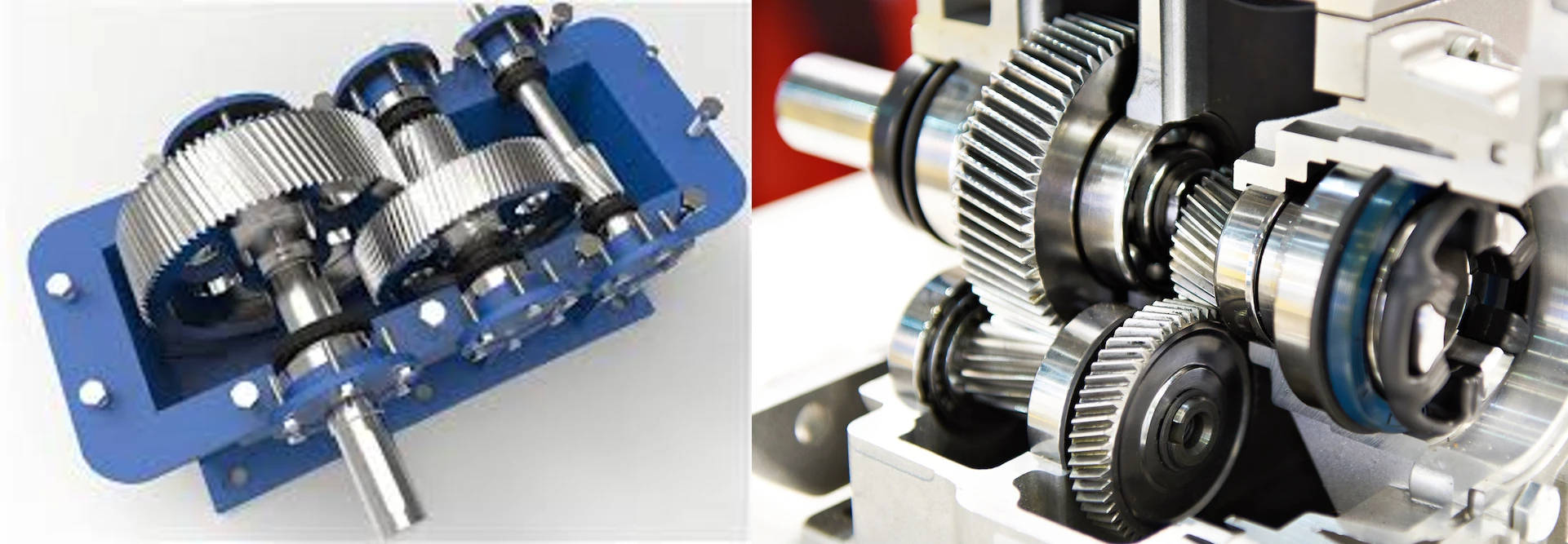
組み立て済みの製品もご提供いたします ヘリカルギアボックス reducer units pairing parallel axis helical gears with housing, bearings, and seals — a bolt-on solution where loose gears are not preferred. For ダブルヘリカルギア variants that eliminate axial thrust entirely, our dedicated series covers modules and material grades for heavy-duty industrial gearboxes. Contact Korea Ever-Power with your gear type, module, shaft configuration, and load data for a direct quotation.
よくある質問
What is the difference between parallel axis helical gears and crossed helical gears?
Parallel axis helical gears mesh between two shafts that run parallel to each other, with opposite helix hands on the mating gears. Contact progresses from point to line, giving high load capacity. Crossed helical gears (screw gears) mesh between non-intersecting shafts at an angle — the contact remains a point throughout mesh, limiting load capacity but enabling versatile shaft angle arrangements. For heavy torque, parallel axis configurations are always preferred.
Which helix angle is standard for parallel axis helical gears?
The most common helix angle range for general industrial parallel axis helical gears is 15°–30°. Below 15°, the benefit over spur gears in terms of noise and contact ratio is marginal. Above 30°, the axial thrust load on the bearings grows significantly and must be managed with thrust-capable bearings or a double-helix configuration. For most machine tool and general industrial applications, 18°–25° is the practical optimum.
What precision grade do I need for high-speed machine tool drives?
For spindle gearboxes and high-speed feed drives, DIN6 (approximately ISO class 6) is the standard minimum. Pitch line velocities above 15 m/s typically require DIN6 or better to avoid excessive dynamic load amplification. For slower-speed general machinery drives, DIN8–DIN9 is acceptable and substantially less expensive. Korea Ever-Power can supply DIN6 through DIN9 from the same base gear — the precision level is achieved by the tooth finishing process (ground for DIN6, hobbed for DIN8–9).
Can you manufacture non-standard modules not listed in the specification table?
Yes. The listed modules (M1 through M12) are standard catalogue items with tooling in-house. Non-standard modules — for example M1.75, M6, or M10 — can be produced as custom orders. Lead time for non-standard modules is typically 5–10 business days longer than standard items. Send your drawing or specify normal module, tooth count, pressure angle, helix angle, and bore for a quotation.
What lubrication is recommended for enclosed parallel axis helical gearboxes?
ISO VG 150–320 mineral or synthetic gear oil is standard for splash-lubricated enclosed gearboxes with ヘリカルギア. Viscosity selection depends on pitch line velocity and ambient temperature: high speed and warm conditions call for lower viscosity (VG 150); slow-speed high-torque drives in cold environments use VG 320. Oil change intervals are typically 2,000–4,000 hours for mineral oil or 6,000–8,000 hours for synthetic PAO. Contaminated oil should be replaced immediately regardless of interval.
What is your minimum order quantity for parallel axis helical gears?
Minimum order requirements depend on the specific module, material, and tooth count. Send your drawing or part specifications and we will provide the MOQ along with the unit price for your required quantity. For prototype and development orders, single-piece samples are available — pricing ranges from $2 to $100 depending on complexity.
How do I specify surface treatment for my application environment?
Surface treatment selection depends primarily on the corrosion environment, operating temperature, and whether the treatment must maintain a specific dimensional allowance. Zinc plating and black oxide are standard for mild industrial environments. Nickel plating provides higher corrosion resistance for chemical splash environments. Dacromet or Geomet coatings are preferred for outdoor or high-humidity applications. Anodizing applies specifically to aluminum-grade gears. Specify your environment and any dimensional tolerance constraints when requesting a quotation.
お客様の声
Lee Hyun-soo, Automation Systems Engineer, Suwon Semiconductor Equipment (Q4 2024)
"We specified M2, DIN6, stainless steel parallel axis helical gears for a wafer transport axis. Dimensional accuracy on all eight pieces was within our 0.01mm tolerance requirement. The gear train runs cleanroom-quiet — no audible mesh tone even at 2,000 rpm. Lead time was 22 business days, which fitted our prototype schedule. Will order production quantities through Korea Ever-Power."
Jung Tae-won, Mechanical Engineer, Busan Solar Equipment OEM (Q2 2024)
"Ordered aluminum M3 parallel axis helical gears for azimuth axis drives on dual-axis solar trackers — 48 pieces in total. Surface was anodized to our color specification. Weight per gear was well within our 150g limit. No corrosion issues after six months of outdoor operation on a coastal site. Service from the Ever-Power team was straightforward — quote to delivery in 28 days."
Choi Min-ki, Procurement Manager, Seoul Medical Device Manufacturer (Q1 2025)
"We needed DIN7 C45 steel parallel axis helical gears with zinc-nickel plating for an infusion pump mechanism. The gears came with a full material certificate and hardness test record. Assembly went smoothly — no rework. The helical tooth form reduced our product noise score in testing from marginal to comfortably passing. Good supplier for medical component sourcing."
Pham Quoc Bao, Engineering Director, Hanoi Machine Tool Company (Q3 2024)
"We replaced hobbed DIN8 gears with ground DIN6 parallel axis helical gears from Ever-Power in a spindle head gearbox rebuild. Surface finish on machined test pieces improved by about 15% based on profilometer readings — the engineers attribute this to lower transmission error from the better-precision gears. Pricing was competitive with local suppliers and delivery was on time."
Yoon Ji-hyun, Equipment Maintenance Engineer, Incheon Parking Systems (Q2 2024)
"Replaced M4 alloy steel helical gears in three automated parking tower lift drives. The noise level after replacement dropped noticeably — residents of the adjacent building stopped filing complaints about gearbox whine during night-time parking operations. Gears have been running 10 months without any sign of abnormal tooth wear. The zinc-plated surface finish still looks clean in the enclosed drive housing."
追加情報
| エディタ | Cxm |
|---|
関連商品
-

工業用合金鋼製ダブルヘリカルギア - 精密ヘリンボーンアセンブリ用フルグレードカスタム合金マトリックス
-
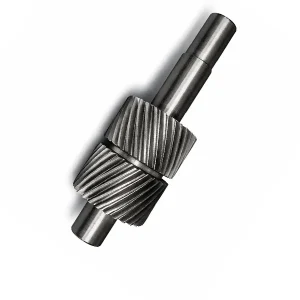
圧延機用ダブルヘリカルギア - 分割アセンブリまたは一体型ヘリンボーン
-

医療用ダブルヘリカルギア ― 診断および軍事用精密駆動装置向け金属グレードの細ピッチヘリンボーンギア
-
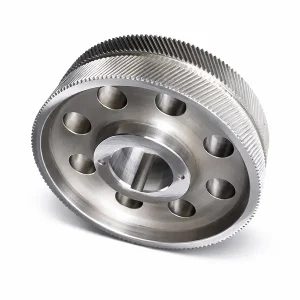
産業用ダブルヘリカルギア ― クレーン、流体ポンプ、船舶推進用、30°ヘリックス角
-

飲料包装機械用ヘリカルギア - AGMAクラス8、超静音高速包装駆動用
-

鉱山機械用浸炭処理ヘリカルギア - 18CrNiMo6鍛造、DINクラス6、高衝撃産業用駆動装置向け
-
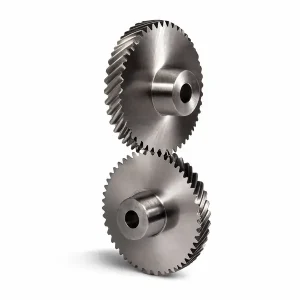
クロスヘリカルギア(スクリューギア)— 軸角度が柔軟な非交差軸伝動装置
-
研磨済みヘリカルギア ― 精密研磨された15°および19°31′のギアで、スムーズで高負荷の伝動を実現します。