Medical Double Helical Gear — Metal Grade Fine-Pitch Herringbone Gears for Diagnostic and Military Precision Drives

Korea Ever-Power Worm Gear Co.,Ltd manufactures fine-pitch metal double helical gears for medical, military, and aircraft precision drives — in alloy steel, stainless steel, copper alloy, and brass — at module M0.15–M2.0, diameter Φ3–120mm, meshing accuracy DIN Class 5–6 (ISO 6 / AGMA 12–13 / JIS 6). Applications: surgical robot wrist joints, CT/MRI table positioning, endoscope tip drives, military sighting and fire control instruments, aircraft cockpit actuators, and any precision mechanism requiring the quiet, zero-axial-thrust herringbone tooth form in a metal material where plastic is unsuitable. TS16949 / ISO 9001:2015 certified. ODM/OEM. Vacuum-packed with plastic tray.
Medical Double Helical Gear (Metal) — Overview
Medical device, military instrument, and aerospace precision drive engineers encounter a category of application where polymer gears — despite their many advantages in automotive and consumer electronics applications — are not appropriate: mechanisms that must transmit meaningful torque at fine pitch in very compact designs, operate through sterilisation cycles that exceed polymer temperature limits, function in radiation fields that degrade polymer molecular weight, achieve dimensional stability under large temperature excursions that cause plastic creep, or satisfy biocompatibility standards that require certified metal alloys rather than polymer grades. For these demanding requirements, fine-pitch metal double helical gears in the medical, military, and aerospace material grades — alloy steel, stainless steel, copper alloy, and brass — are the engineering solution of choice.
Korea Ever-Power Worm Gear Co.,Ltd manufactures medical double helical gears in metal at module M0.15–M2.0 and outer diameter Φ3–120mm, achieving meshing accuracy DIN Class 5–6 (equivalent to ISO 6, AGMA 12–13, JGMA 1, JIS 6, GB 6). The standard dimension is Φ12mm. Material choices cover the full range required by medical, military, and aircraft precision drive specifications: alloy steel for maximum torque density; stainless steel (SS304/SS316) for autoclave compatibility and corrosion resistance; brass for surgical instrument tradition, non-magnetic properties, and excellent machinability at fine pitch; and copper alloy for EMI-shielding applications in military electronics enclosures. TS16949 and ISO 9001:2015 certified. ODM/OEM service. All parts vacuum-packed with plastic tray for precision tooth protection. For the complete range of helical cut gears from Korea Ever-Power, see the full catalog.
Technical Specifications

Product Specifications — Medical Double Helical Gear (Metal)
| Parameter | Value |
|---|---|
| Gear Type | Double Helical Gear (Herringbone) — Metal Fine-Pitch |
| Standard Dimension | Φ12 mm (Φ3–120 mm available) |
| Module Range | M0.15 – M2.0 |
| Meshing Grade | ISO 6 / JGMA 1 / JIS 6 / AGMA 12–13 / DIN 6 (DIN 5 available) |
| Material Options | Metal, Steel, Stainless Steel, Copper, Brass, Alloy — as specified per drawing |
| Application Sectors | Medical, Military, Aircraft, Mechanical, Industrial, Automotive |
| Gear Capability | External herringbone and internal helical ring gear configuration |
| Supply Format | ODM / OEM — per customer drawing or sample |
| Packing | Vacuum-packed with individual plastic tray |
| Delivery | DHL, UPS express delivery available |
| Certificate | ISO 9001:2015 / TS16949 |
Material Selection for Medical and Military Fine-Pitch Double Helical Gears
Material selection for medical and military fine-pitch double helical gears is driven by requirements that are distinct from conventional industrial gear applications — biocompatibility, MRI compatibility, sterilisation resistance, radiation stability, and EMI shielding all enter the selection decision alongside the standard mechanical performance criteria:
| Material | Key Properties | Medical / Military Use | Limitation |
|---|---|---|---|
| Alloy Steel (20CrMnTi / 17CrNiMo6) | Highest torque/weight ratio; carburized HRC 58-62 | Surgical robots requiring maximum torque density; military weapon servo drives; high-stress aircraft actuators | Ferromagnetic — not MRI-compatible; corrodes without protection |
| Stainless Steel (SS316L) | Corrosion-resistant; autoclave-compatible; non-contaminating | Reusable surgical instrument drives; sterilisable diagnostic table mechanisms; marine medical equipment | Weakly magnetic (austenitic SS316L is low-magnetic but not fully non-magnetic); limited hardness vs alloy steel |
| Brass (CuZn37 / CuZn39) | Non-magnetic; excellent machinability; traditional surgical material; non-sparking | MRI-compatible surgical drives; dental handpiece gear trains; field medical instruments; non-sparking military drives | Lower strength than steel; zinc content may not meet some biocompatibility standards — specify brass alloy grade carefully |
| Copper Alloy (Beryllium Copper) | Non-magnetic; EMI shielding; precipitation-hardenable to 35–40 HRC | Military electronics enclosures requiring conductive gear bodies; EMP-hardened fire control systems; radar antenna drives | Beryllium is toxic in machining — requires controlled handling; high material cost |
| Titanium Alloy (Ti-6Al-4V) | Biocompatible; non-magnetic; high strength/weight; MRI-compatible | Implantable surgical robot components; bone-contact instrument drives where MRI follow-up imaging is required | Very high material cost; difficult to machine at fine pitch — premium lead time; available on request |
Why Metal Double Helical Over Plastic for Medical and Military Applications
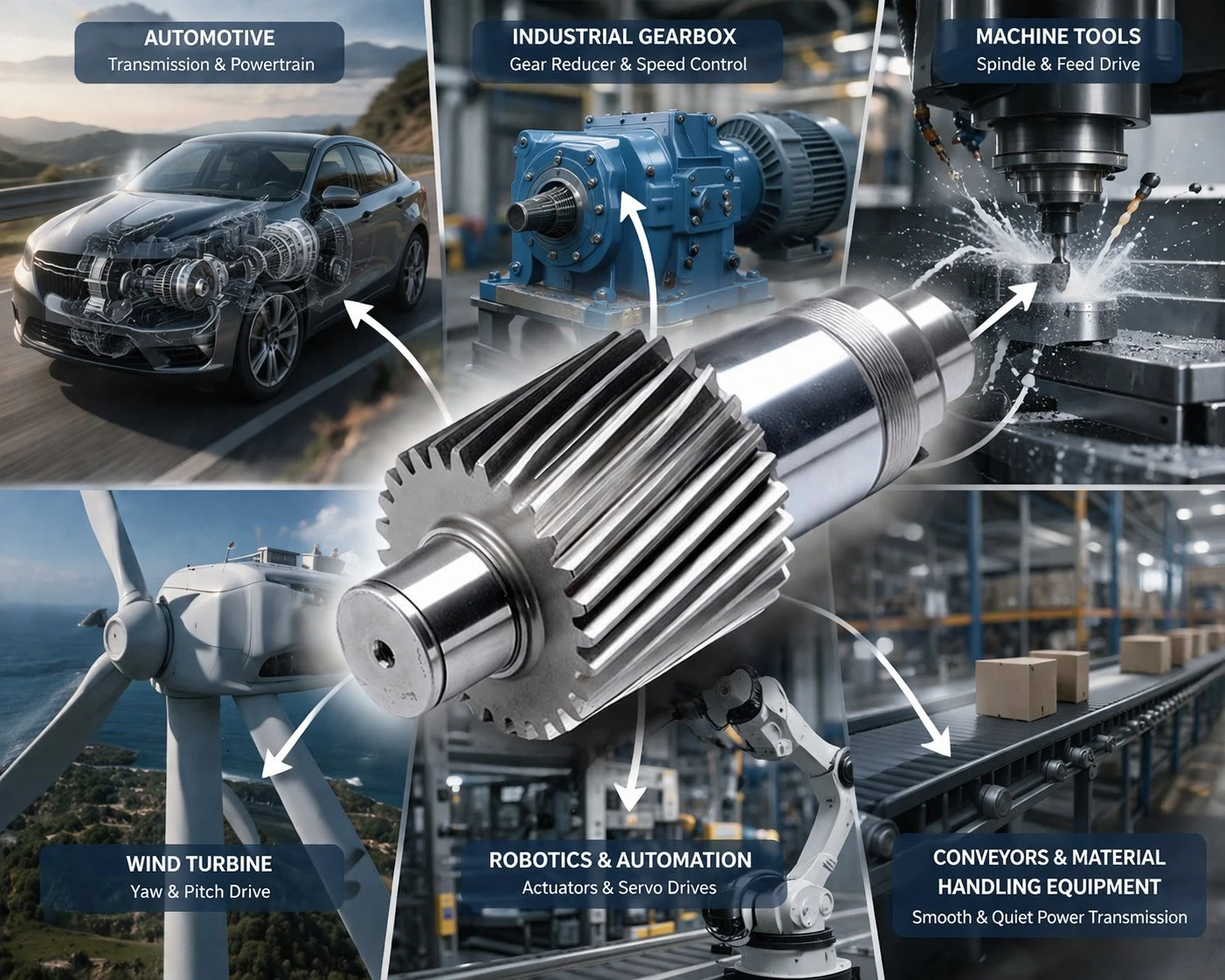
Sterilisation Requirements That Exceed Polymer Limits
Autoclave sterilisation (134°C / 3 bar steam / 18 minutes per cycle) is the gold standard for reusable surgical instruments. POM plastic loses dimensional stability above 100°C and shows progressive creep under the sterilisation temperature cycling, causing gear tooth profile errors that accumulate over multiple sterilisation cycles. PA (Nylon) absorbs moisture during the steam autoclave cycle and changes dimensions on cooling. Only PEEK plastic is genuinely autoclave-stable — but at a cost premium that approaches the cost of stainless or brass metal for small fine-pitch gears. Stainless steel (SS316L) or brass medical double helical gears withstand unlimited autoclave cycles without any dimensional change or property degradation, making them the standard specification for reusable surgical drive mechanisms that must be sterilised after each procedure.
Ionising Radiation and Gamma Sterilisation
Single-use medical devices and sterile-packaged instrument sub-assemblies are routinely gamma-irradiated (25–50 kGy dose) for terminal sterilisation. Most engineering polymers (POM, PA, PBT) undergo chain scission and embrittlement at cumulative gamma doses above 25 kGy — the dose used for single-use device sterilisation. Only PEEK and certain specialty polymers maintain adequate properties at these doses. Metal medical double helical gears in any grade are completely unaffected by gamma sterilisation doses. For manufacturers of single-use diagnostic or therapeutic devices containing precision gear drives, metal is the required material for gamma terminal sterilisation compatibility without PEEK's material cost premium.
Torque Density at Fine Pitch
At module M0.5–M1.5 and Φ10–30mm, a metal alloy steel double helical gear transmits 4–8× the torque of an equivalent POM gear in the same envelope, and 2–3× the torque of an equivalent PEEK gear. For surgical robot wrist joint actuators — where every cubic centimetre of gearhead volume and every gram of mass directly affects the surgeon's reach and ergonomics — this torque density advantage makes metal the material of choice for the highest-torque stages of a surgical robot drive chain, even when plastic is used for lower-torque stages where self-lubrication is more valuable than load capacity.
Core Advantages for Medical, Military, and Aerospace Drive Applications

▶ DIN Class 5–6 (AGMA 12–13) Metal Precision
Achieving DIN Class 5–6 in metal at M0.15–M2.0 requires the same level of machining precision as precision CNC machine tool gears — tight control of tooth profile form, lead, and pitch on gear bodies that may be only 3–12mm in diameter. Korea Ever-Power maintains the tooling, fixturing, and metrology capability to achieve this accuracy consistently across small-batch and single-piece orders in brass, copper, stainless, and alloy steel.
▶ Brass for Surgical Instrument Tradition
Brass (CuZn37, CuZn39) has been the standard precision instrument material in surgical and dental instruments for over a century — non-magnetic for MRI compatibility, excellent machinability for fine-pitch cutting, non-sparking for use in oxygen-enriched surgical environments, and compatible with ethylene oxide (EtO) gas sterilisation. Korea Ever-Power's brass double helical gears at M0.2–M1.0 serve the precision range where tradition, MRI compatibility, and machinability intersect.
▶ Internal Gear Capability
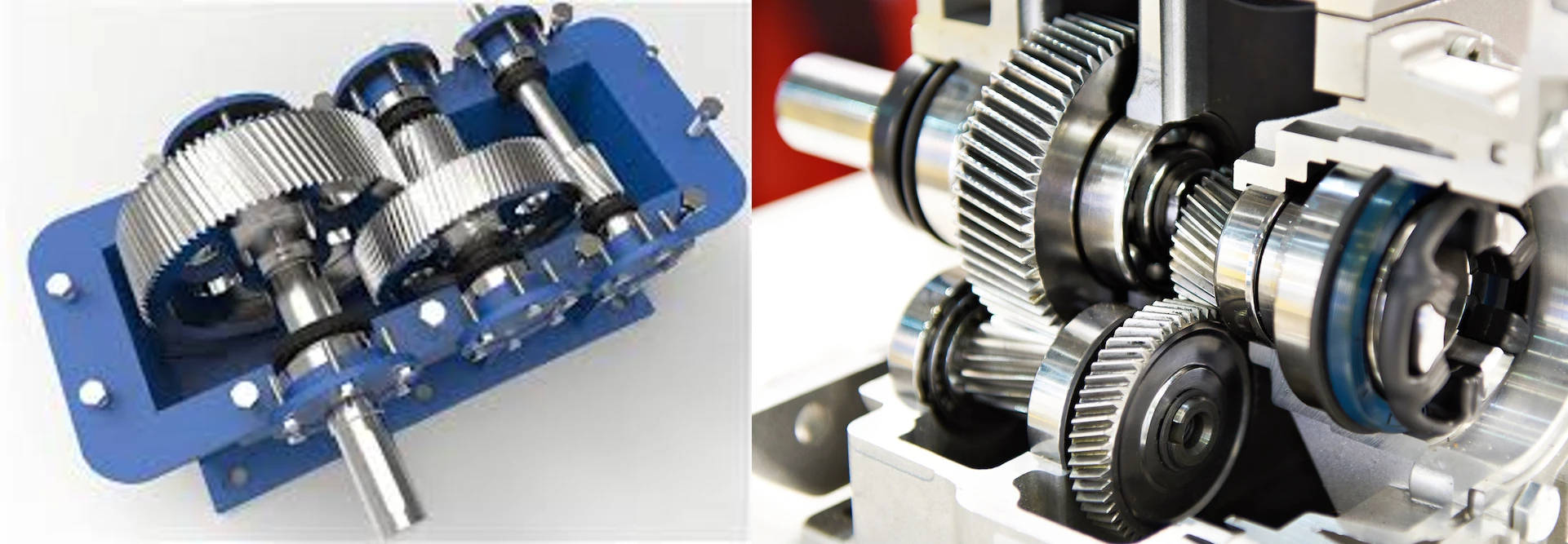
Korea Ever-Power manufactures not only external herringbone gears but also internal helical ring gears — an essential configuration for compact planetary gear heads used in surgical robot wrist joints, endoscope tip drive modules, and minimally invasive surgical (MIS) tool actuators where the sun-planet-ring gear arrangement achieves the highest torque density in the smallest diameter envelope.
▶ Zero Axial Thrust in Compact Metal Assemblies
At module M0.5 in brass with β = 25°, the axial thrust from a single helical gear would require a thrust-capable miniature bearing — adding cost, mass, and length to an already space-constrained surgical or military instrument mechanism. The double helical configuration cancels axial force at the gear body, enabling simpler needle roller or jewel bearing end supports in precision metal instrument drives.
▶ TS16949 for Medical Equipment Supplier Qualification
TS16949 (IATF16949) represents the highest tier of manufacturing quality system certification in the general precision parts industry. Medical device OEM manufacturers increasingly use TS16949 as the quality system benchmark for component suppliers — the PPAP documentation, FMEA, and control plan discipline that TS16949 requires provides the traceability and process control evidence needed for medical equipment supplier qualification audits under ISO 13485 frameworks.
Application Scenarios — Medical, Military, and Aerospace

Surgical Robotics and Minimally Invasive Surgical Tools
Surgical robot wrist joints (end-effector drive) and the tip actuation mechanisms of endoscopes and laparoscopic tools use metal fine-pitch double helical gear trains because these drives must transmit meaningful gripping or cutting forces in a mechanism no larger than a human finger. Alloy steel (17CrNiMo6 or 20CrMnTi) carburized double helical gears at M0.3–M1.0 are specified for the highest-force stages; stainless steel (SS316L) gears are used for stages adjacent to patient contact areas that must be autoclave-sterilised. Korea Ever-Power provides material certification and surface finish documentation appropriate for ISO 13485 medical device manufacturing supply chains. All helical cut gears are produced per customer drawing with ODM design support available.
CT Scanner, MRI Table, and Diagnostic Imaging Drives
CT scanner gantry rotation drives, MRI patient table positioning mechanisms, and C-arm positioning systems use fine-pitch metal double helical gears in the precision drive stages because: (1) acoustic noise from the gear mesh appears in the clinical environment where patient and operator are directly present; (2) positioning accuracy and repeatability is critical for image quality; and (3) the MRI environment requires non-magnetic materials (brass or austenitic stainless) for all gears within the RF-shielded bore zone. Brass M0.5–M1.5 double helical gears are the standard specification for MRI-compatible table drives. For corresponding heavy industrial drive applications, see the helical gear manufacturer Korea Ever-Power range. The worm gear series covers the high-ratio self-locking drives used in table height adjustment mechanisms.
Military Sighting, Fire Control, and EMP-Hardened Instruments
Military targeting systems, gun elevation and traverse drives, sighting system zoom mechanisms, and EMP-hardened electronics enclosures all use metal fine-pitch double helical gears in material grades selected for specific environmental requirements: copper alloy (beryllium copper or phosphor bronze) for drives inside Faraday-cage electronic enclosures where conductive gear bodies contribute to the EMI/EMP shielding; brass for non-sparking environments; alloy steel for maximum torque density in actuation drives where weight is the primary constraint. The herringbone tooth form in these applications suppresses the tonal gear mesh noise that would otherwise appear in the acoustic signature of military equipment — a consideration both for operator acoustic comfort and for electronic signal noise floor.
Quality and Service

- ✔ ODM and OEM service: design support for material grade selection, tooth geometry optimisation, and assembly configuration for new medical or military precision drive designs
- ✔ Precision internal gear capability: internal helical ring gears (for planetary surgical drive heads) manufactured in the same material range and accuracy grade as external herringbone gears
- ✔ Sample within one week for simple models; photographic and video production progress reports available for development orders
- ✔ Vacuum packing with individual plastic tray protecting precision tooth profiles of each gear from contact damage during storage and transit
- ✔ DHL / UPS express delivery for prototype and development orders with tracking; consolidated shipment with other Korea Ever-Power products to reduce freight cost
Gear Types from Korea Ever-Power

Korea Ever-Power manufactures precision metal gear types in all grades for medical, military, and aerospace precision drive systems:
- ⬡ Metal Single Helical Gear (Medical Grade): For less noise-critical precision drives. Same material range. Full catalog at helical cut gears.
- ⬡ Plastic Double Helical Gear (Medical Grade): POM/PA/PEEK herringbone gears for applications where self-lubrication and weight reduction are priorities over metal torque density. Available in same M0.15–M2.2 range.
- ⬡ Internal Helical Ring Gear: Planetary drive ring gears in brass, stainless, or alloy steel for compact surgical robot and diagnostic imaging drive heads.
- ⬡ Worm Gear (Precision Medical): High-ratio self-locking precision worm sets for surgical table height adjustment and patient positioning mechanism. See the worm gear range.
- ⬡ Precision Bevel Gear: Right-angle drives for endoscope tip deflection mechanisms and instrument articulation joints in surgical robots.
Frequently Asked Questions
When should I specify a metal double helical gear instead of a PEEK plastic herringbone gear for a medical application?
Specify metal over PEEK when: (1) the transmitted torque exceeds what a PEEK gear of the available size can carry reliably — metal alloy steel provides 3–5× the torque capacity of PEEK in the same module and diameter; (2) the mechanism is subject to gamma irradiation sterilisation at doses above 25 kGy, where PEEK begins to show property degradation; (3) the application is within an MRI bore zone and requires brass (non-magnetic) rather than the slightly paramagnetic PEEK; (4) the total lifecycle sterilisation cycle count exceeds 2,000 autoclave cycles, where even PEEK shows very slow dimensional drift compared with metal's complete stability; or (5) the gear must operate in a vacuum environment (space or laboratory) where polymer outgassing is a contamination concern.
Why is brass used in surgical instrument precision drives?
Brass has been the material of choice for precision surgical instrument mechanisms since the 19th century for four reasons that remain valid today: (1) it is completely non-magnetic, making brass instruments safe for use in MRI suites without the risk of ferromagnetic attraction or image artefact; (2) its machinability is exceptional — brass cuts cleanly at fine pitches (M0.2–M0.8) where the cutting forces in alloy steel would deflect miniature tool shanks and produce inaccurate tooth profiles; (3) it is compatible with all common sterilisation methods including steam autoclave, EtO gas, and glutaraldehyde chemical sterilisation; and (4) it is non-sparking in oxygen-enriched surgical environments where electrosurgical units are in use, reducing fire risk. Korea Ever-Power manufactures brass double helical gears in CuZn37 (brass 63/37) and CuZn39 as standard grades; other copper alloy grades on request.
Can Korea Ever-Power manufacture the internal ring gear for a surgical planetary drive head?
Yes. Korea Ever-Power's gear shaping capability covers internal helical ring gears in the medical precision range (M0.3–M2.0, bore diameter Φ8–120mm) in all the materials listed — stainless steel, alloy steel, and brass. Internal ring gears at DIN Class 5–6 are manufactured by gear shaping with precision internal shaping cutters; internal herringbone (double helical) ring gears are manufactured with opposite-hand shaped sections separated by a bore-machined relief groove. Provide the sun gear module, number of planet gears, planet gear tooth count, and bore diameter, and Korea Ever-Power will calculate the ring gear specification and confirm manufacturing feasibility.
What is AGMA 12-13 accuracy and how does it compare with DIN Class 5-6?
AGMA accuracy classes run in the opposite direction to DIN classes: higher AGMA numbers represent higher precision, while lower DIN numbers represent higher precision. AGMA 12 (in the older AGMA 390 numbering) is approximately equivalent to DIN Class 6; AGMA 13 is approximately equivalent to DIN Class 5. Korea Ever-Power achieves AGMA 13 / DIN Class 5 on medical and military fine-pitch double helical gears in brass, stainless, and alloy steel — this precision level is equivalent to the tooth profile accuracy used in high-speed turbine gearboxes and is the standard precision grade for medical device precision drive components. Gear analyser reports in both AGMA and DIN format are available on request.
How long does it take to produce a sample metal medical double helical gear?
For a simple model (standard module, round gear body, readily available material in stock), Korea Ever-Power can produce a sample within one week from drawing confirmation. For models requiring special alloy procurement (beryllium copper, titanium, or specialty stainless) or special heat treatment, sample lead time extends to 2–3 weeks. Express DHL or UPS delivery is available for all samples, with tracking from dispatch. Weekly progress photos and videos are provided for development orders where the customer needs to monitor production.
Customer Reviews
Kim Ji-won, R&D Engineer, Meditec Robotics Seoul (Q3 2024)
"We specified SS316L stainless double helical gears at M0.5 for a reusable laparoscopic tool wrist drive. Korea Ever-Power produced DIN Class 5 parts with full dimensional report in 6 working days. After 350 autoclave sterilisation cycles, our incoming inspection confirmed tooth profile remained within original tolerance — exactly as required for our 500-cycle instrument lifetime specification."
Park Sung-yoon, Medical Device Engineer, Dongbu Dental Instruments (Q4 2024)
"We use brass double helical gears from Korea Ever-Power in dental handpiece drive heads. The brass CuZn37 material provides the machinability needed at M0.3 and the non-magnetic property required for our portable MRI-compatible dental suite. Korea Ever-Power confirmed the alloy grade by spectrometer analysis report on each batch — essential for our dental device regulatory file."
Lee Heon-su, Systems Engineer, Agency for Defense Development (Q2 2024)
"We ordered beryllium copper double helical gears for an EMP-hardened electronics enclosure drive. Korea Ever-Power confirmed the CuBe2 specification by spectrometer, produced to DIN Class 6 with the dimensional report in 10 working days including the controlled beryllium machining protocol documentation. The only supplier who handled the BeCu specification without requesting a special process development fee."
Watanabe Naomi, Design Engineer, Hitachi Medical Systems (Q1 2025)
"We replaced the stainless single helical gear in a CT gantry drive with brass double helical gears from Korea Ever-Power. The herringbone mesh noise reduction was 7 dB measured in our acoustic test chamber — passed our 65 dB(A) clinical environment specification that the single helical design failed. The brass non-magnetic property confirmed by the alloy certificate was required for the MRI-adjacent installation."
Choi Eun-ha, Equipment Engineer, Samsung Biomedical Research (Q3 2024)
"We compared Korea Ever-Power's alloy steel double helical gears at M1.0 against PEEK plastic equivalents for a sterilisable diagnostic positioning drive. The alloy steel gears carried 4× the torque in the same envelope and showed zero dimensional change after 200 gamma sterilisation cycles at 35 kGy dose. The PEEK gears we tested began showing tooth profile creep after 150 cycles. We adopted the alloy steel specification for the production design."
Editor: Cxm
Additional information
| Editor | Cxm |
|---|
Related products
-

Industrial Alloy Steel Double Helical Gears — Full-Grade Custom Alloy Matrix for Precision Herringbone Assembly
-

Automotive Double Helical Gear — POM / PA / PEEK Fine-Pitch Plastic Herringbone Gears
-

Steel Double Helical Gear — SS304 and SS316 Stainless for Corrosion-Resistant Herringbone Drives
-

Heavy Machinery Double Helical Gear — Cast Steel Soft Tooth Flank, QT, ISO Grade 8–9
-

Mining Machinery Carburized Helical Gear — 18CrNiMo6 Forged, DIN Class 6 for High-Impact Industrial Drives
-

Parallel Axis Helical Gears — High-Speed Heavy-Load Transmission for Parallel Shaft Systems
-
Ground Helical Gears — Precision-Ground 15° and 19°31′ for Smooth, High-Load Transmission
-
Double Helical Gear — Zero Axial Thrust for High-Torque Parallel Shaft Drives