Industrial Alloy Steel Double Helical Gears — Full-Grade Custom Alloy Matrix for Precision Herringbone Assembly
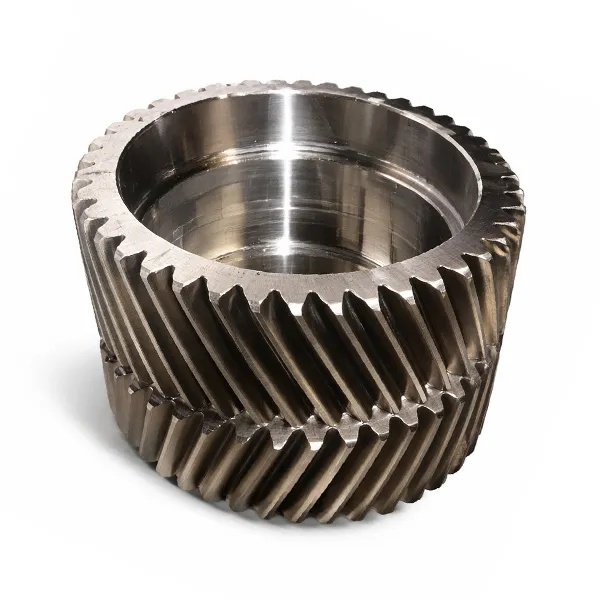
Korea Ever-Power Worm Gear Co.,Ltd manufactures industrial alloy steel double helical gears in the full range of engineering steel grades — from 45# carbon steel through 40Cr, 42CrMo, 20CrMnTi, 20CrNiMo, and 17CrNiMo6 — per customer drawing or specification. Minimum order quantity: 1 piece. The key manufacturing requirement for herringbone gears beyond tooth profile accuracy is precise control of the center plane position — the symmetry plane between left-hand and right-hand helix halves — within the assembly tolerance specified by the gearbox designer. Korea Ever-Power controls center plane position as part of the standard dimensional inspection on all double helical gear production. ODM engineering support available for alloy grade selection and center plane tolerance specification.
Industrial Alloy Steel Double Helical Gears — Overview
The design of a double helical gear drive involves more engineering decisions than any other gear configuration. The gear designer must select not only the tooth geometry parameters common to all cylindrical gears — module, tooth count, helix angle, pressure angle, face width — but also the alloy steel grade that matches the application's load severity, operating temperature range, and surface hardness requirement; the heat treatment cycle that achieves the specified properties through the tooth cross-section; and most critically for herringbone gears, the center plane alignment specification that determines how precisely the left-hand and right-hand helix halves must be aligned in the assembled gearbox for even load distribution across both tooth faces. Each of these decisions has cost and performance implications, and incorrect choices lead either to premature gear failure or unnecessary over-specification cost.
Korea Ever-Power Worm Gear Co.,Ltd manufactures industrial alloy steel double helical gears across the complete range of engineering steel grades used in industrial gearboxes — from 45# carbon steel for moderate-duty conveyor drives to 17CrNiMo6 carburized hard tooth for railway and offshore applications — with minimum order quantity of 1 piece and full custom per drawing. Korea Ever-Power's engineering team provides ODM support for alloy grade selection and center plane tolerance specification for customers designing new gearboxes or upgrading existing gear drive systems. For the complete product catalog of helical cut gears from Korea Ever-Power, see the full product range.
Technical Specifications

Product Specifications — Industrial Alloy Steel Double Helical Gear
| Parameter | Value |
|---|---|
| Gear Type | Double Helical Gear (Herringbone) — Alloy Steel |
| Tooth Form | Double helical (herringbone) — left + right helix |
| Material Range | 45# / 40Cr / 42CrMo / 20CrMnTi / 20CrNiMo / 17CrNiMo6 — or other alloy per drawing |
| Shape | Round (cylindrical gear body) |
| Minimum Order Quantity | 1 piece |
| Usage / Application | Industrial — all sectors requiring high-contact-ratio, zero-thrust parallel shaft drives |
| Center Plane Alignment | Controlled and reported per customer specification as part of dimensional inspection |
| Manufacturing Method | Generative method (hobbing/shaping); optional grinding for precision-grade versions |
| Supply Format | Custom per drawing; ODM grade selection support available |
| Payment Terms | 50% in advance, 50% against finished material photos before delivery (T/T) |
The Center Plane — The Critical Assembly Dimension in Double Helical Gears
The single most important assembly requirement for a double helical gear drive — beyond the tooth profile geometry — is accurate positioning of the center plane. The center plane (sometimes called the symmetry plane or mid-plane) is the plane perpendicular to the gear axis that lies midway between the left-hand and right-hand helix sections of each gear. In the assembly, both gears of the pair must have their center planes aligned to within the tolerance specified by the gearbox designer; if the center planes of the two gears are offset relative to each other, the load distribution between the two helix halves is unequal — one half carries more load than the other, partially negating the zero-axial-thrust benefit and creating an asymmetric wear pattern that shortens gear service life.
How Center Plane Error Arises
Center plane position error in a double helical gear assembly can arise from three sources: manufacturing error in the gear body (the central relief groove position deviates from the design centerline); assembly error (the gear is not axially positioned correctly on the shaft during installation); and operational drift (thermal expansion during steady-state operation shifts the gear body axially relative to its design position). Korea Ever-Power controls the manufacturing component of center plane error by measuring and documenting the relief groove position relative to both gear end faces on every double helical gear produced. The assembly and operational components must be controlled by the gearbox designer through shaft shoulder positioning and shaft thermal expansion allowance.
Center Plane Tolerance Specification
The allowable center plane position error in assembly depends on the tooth face width and the helix angle. For a typical industrial double helical gear with face width b = 200mm and helix angle β = 25°, a center plane offset of 1mm between the two mating gears causes a load imbalance of approximately 5–8% between the two helix halves — generally acceptable in service. The same offset in a narrow face width gear (b = 50mm, β = 30°) causes a 20–25% load imbalance — potentially significant for service life. Korea Ever-Power can advise on appropriate center plane tolerance specification for new gearbox designs as part of the ODM engineering support service.
Alloy Steel Grade Selection Guide for Industrial Double Helical Gears
| Steel Grade | Max Hardness | Core Toughness | Best Application for Double Helical |
|---|---|---|---|
| 45# Carbon Steel | HB 240–280 (QT) | Good | Moderate-duty conveyors, agitators, slow industrial gearboxes — lowest cost |
| 40Cr | HRC 48–54 (induction) | Good | General industrial gearboxes, pump drives — cost-effective step up from 45# |
| 42CrMo | HRC 50–55 (induction) | Very good; high toughness | Rolling mills, mining, offshore, heavy shock-loaded industrial drives |
| 20CrMnTi | HRC 58–62 (carburized) | Excellent case/core differential | High-cycle industrial drives, CNC machine tools, compressor final stages |
| 20CrNiMo | HRC 58–62 (carburized) | Better sub-zero toughness than 20CrMnTi | Marine auxiliary, offshore winch, cold-climate outdoor industrial drives |
| 17CrNiMo6 | HRC 58–62 (carburized) | Highest — Charpy impact to −40°C | Railway traction, high-speed turbine gearboxes, classification-society approved marine |
Core Advantages for Industrial Alloy Steel Double Helical Gear Supply

▶ Center Plane Control and Documentation
Relief groove position relative to gear end faces measured and documented on every double helical gear as part of the standard dimensional inspection package. Customers who specify a center plane position tolerance receive a certificate confirming conformance — critical for gearboxes with narrow face widths or high helix angles where center plane error sensitivity is highest.
▶ Full Alloy Steel Grade Range — MOQ 1
No minimum order quantity. Korea Ever-Power manufactures single-piece prototype and replacement double helical gears in any of the standard industrial alloy steel grades — from 45# carbon steel for simple low-load applications to 17CrNiMo6 carburized for railway and offshore certified drives. Single-piece pricing is confirmed at the quotation stage.
▶ Generative Manufacturing Method
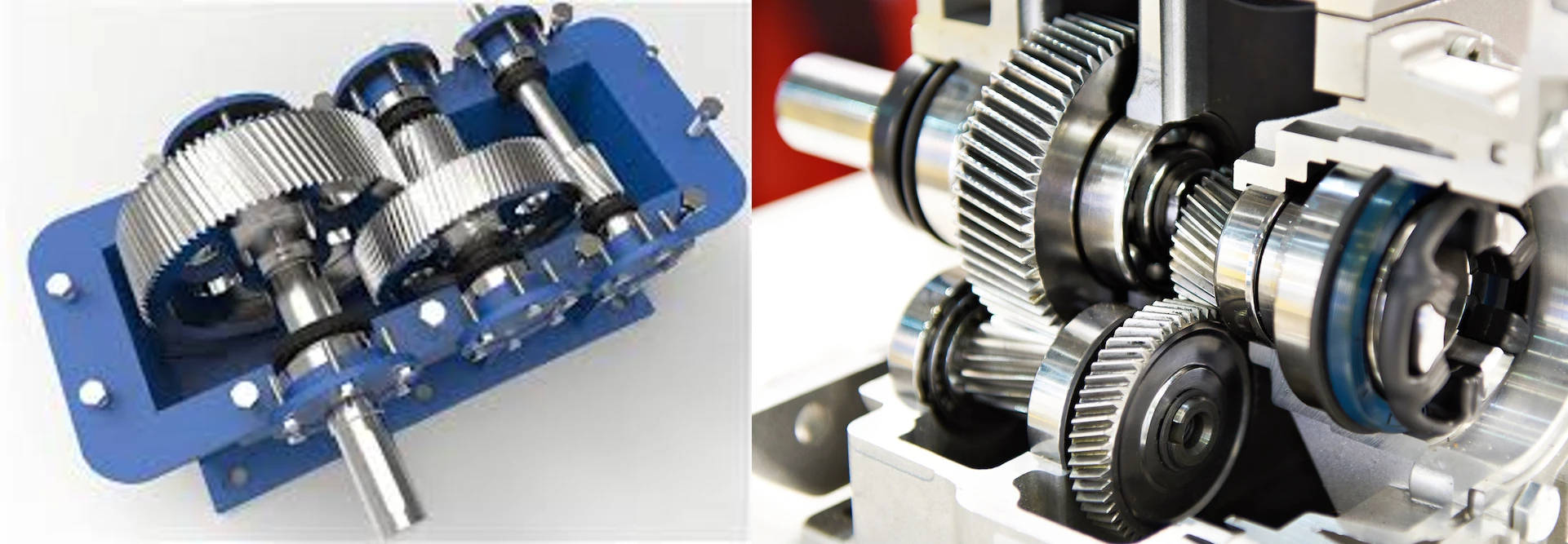
Double helical gears are manufactured by the generative method (gear hobbing for external gears, gear shaping for configurations where hobbing is impractical). The generative method produces the correct involute tooth profile across the entire tooth height through continuous motion of the cutter relative to the blank — essential for double helical gears where the two helix halves must mesh simultaneously with the mating gear.
▶ ODM Grade Selection Engineering Support
Customers designing new gearboxes or selecting a replacement alloy grade can request Korea Ever-Power's engineering consultation service. Provide the transmitted torque, speed, duty cycle, thermal environment, and life requirement — we recommend the appropriate alloy grade and heat treatment and confirm the expected service life at the proposed specification before manufacture begins.
▶ Stable and Competitive Pricing
Korea Ever-Power operates as a direct manufacturer with in-house forging, machining, heat treatment, and inspection capability — no intermediary trading company margin in the supply chain. Pricing is quoted per piece for prototypes and per batch for production quantities, with regular pricing review for long-term supply agreements. Customers confirm price by sending detailed requirements to the engineering team.
Application Scenarios for Industrial Alloy Steel Double Helical Gears
Custom One-Off and Small-Batch Replacement Gears
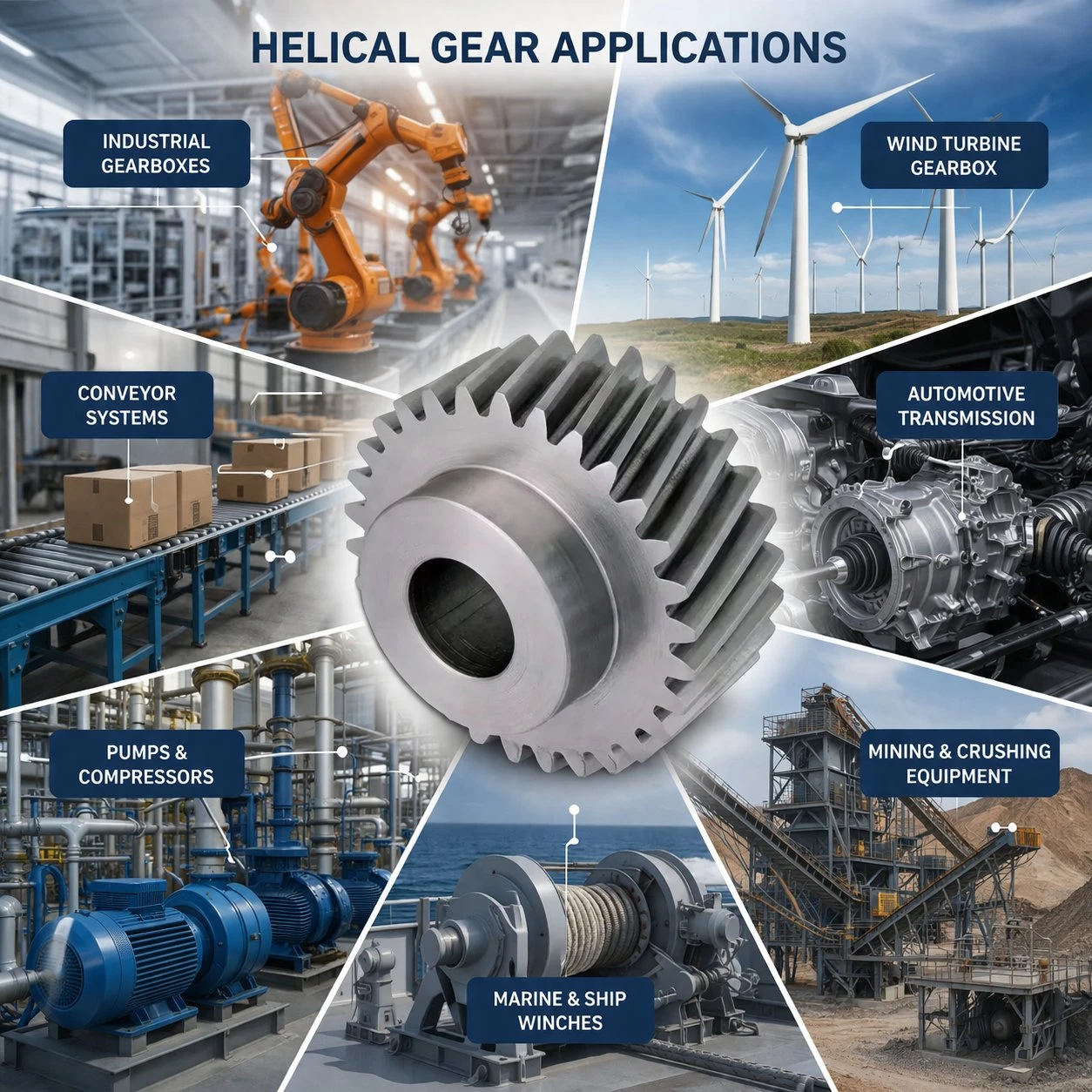
The most common use case for the MOQ-1 capability is replacement of worn double helical gears in legacy gearboxes where the original manufacturer has discontinued the part. Industrial maintenance engineers provide a worn gear sample or an archived drawing; Korea Ever-Power measures the geometry, confirms the alloy grade by OES spectrometer, and produces a matched replacement in 15–25 working days depending on size and heat treatment. The center plane position is verified against the worn gear measurement to ensure the replacement fits the existing gearbox housing and shaft shoulder positioning. For all double helical gear products available from Korea Ever-Power, the full range is shown at helical cut gears.
New Gearbox Design and Prototyping
Equipment designers who select double helical gears for a new gearbox design typically need one or two prototype sets for functional and endurance testing before committing to production tooling and volumes. Korea Ever-Power's MOQ-1 capability and 15–25 working day lead time for prototypes allows the design iteration cycle to proceed without long procurement lead times. Alloy grade changes between prototype versions can be accommodated with short changeover — from a 45# soft tooth prototype for initial assembly and clearance verification to a 42CrMo HRC 50-55 version for the first functional load test. Refer to the helical gear manufacturer Korea Ever-Power for engineering consultation. For drives requiring worm gear elements in the same design, the worm gear series covers all configurations. For the broader context of double helical gear design, engineering literature covers the full theory.
Quality and Service

- ✔ Custom per drawing or specification: any alloy grade, any module, any helix angle, any diameter from single piece upward
- ✔ Center plane position documented in the dimensional inspection report on every double helical gear produced
- ✔ Sample available for new product development; sample cost credited to first production order
- ✔ Modification of existing data: customers can send their own alloy grade, dimensional, or tolerance data for discussion — most modifications can be accommodated
- ✔ 50/50 T/T payment terms: 50% advance at order placement, 50% balance against finished material photos before delivery
Gear Types from Korea Ever-Power

Korea Ever-Power manufactures the full range of industrial gear types in all alloy steel grades, with the same MOQ-1 and custom capability as the double helical range:
- ⬡ Single Helical Gear: Where double helical complexity is not required. Full alloy grade range at helical cut gears.
- ⬡ Spur Gear: Straight-cut parallel shaft gears for moderate-speed industrial drives and open gearing.
- ⬡ Bevel Gear: Right-angle intersecting shaft drives in straight and spiral configurations.
- ⬡ Worm Gear: High-ratio compact 90° drives. See the worm gear series for full range.
- ⬡ Internal Ring Gear: For planetary and epicyclic reduction configurations.
Frequently Asked Questions
What is the center plane of a double helical gear and why does it matter?
The center plane is the symmetry plane that divides the double helical gear body midway between the left-hand and right-hand helix sections — typically passing through the center of the relief groove. When two mating double helical gears are assembled, their center planes must be aligned (within the specified tolerance) for the two helix halves of each gear to mesh simultaneously and share the load equally. A center plane misalignment causes one helix half to carry more load than the other, which reduces the zero-thrust cancellation benefit, creates an asymmetric contact pattern that accelerates tooth wear on one side, and can generate a residual axial force that loads the shaft bearings. Korea Ever-Power measures and documents center plane position on every double helical gear as part of the standard inspection.
How do I choose between 42CrMo and 20CrMnTi for an industrial double helical gear?
The key decision factors are load character and heat treatment process: 42CrMo is induction-hardened to HRC 50-55 and retains a tough QT core — the preferred specification when shock loads or workpiece-entry impact are part of the duty cycle (rolling mills, crushers, heavy conveyors with irregular loads). 20CrMnTi is carburized to HRC 58-62 and achieves substantially higher contact fatigue strength — the preferred specification for continuous high-cycle loading without significant shock (CNC machine tool drives, high-speed compressors, automotive drivetrain). If your application is primarily high-cycle fatigue without significant shock loading, 20CrMnTi provides a longer service life at the tooth contact surface. If shock loading is significant, 42CrMo's tougher core is the safer choice even though its surface hardness is lower.
Can Korea Ever-Power help select the right alloy steel grade if I only know my application requirements?
Yes — this is the ODM service. Provide the following: transmitted torque at the gear mesh, input and output speed, duty cycle (hours per day, direction reversals per hour), design life target (hours), any thermal or corrosive environmental factors, and any regulatory requirements (food contact, marine classification, railway standard). Korea Ever-Power will recommend the appropriate alloy grade, heat treatment, tooth accuracy class, and whether tooth grinding is justified for the application. The ODM service is provided as part of the quotation process — there is no separate charge for the alloy selection consultation.
Why can't all double helical gears be cut by hobbing?
Gear hobbing uses a hob cutter that traverses axially along the gear blank. For a double helical (herringbone) gear, the hob must change from the left-hand helix path to the right-hand helix path at the center of the gear — which requires the hob to exit the tooth space at the central relief groove position and re-enter from the other side for the opposing helix. This is mechanically possible for herringbone gears with a sufficient central relief groove (the common "open herringbone" form). For continuous herringbone gears without a central groove (the "closed herringbone" or integrated herringbone), hobbing cannot be used and gear shaping is the manufacturing method — at lower productivity than hobbing. Korea Ever-Power manufactures both open herringbone (hobbed) and closed herringbone (shaped) configurations depending on the customer's design requirement.
Customer Reviews
Lee Hyun-jae, Gearbox Design Engineer, Doosan Bobcat (Q3 2024)
"We used Korea Ever-Power's ODM alloy selection service for a new double helical gear drive we were designing. They recommended 20CrMnTi carburized based on our duty cycle data — we had originally specified 42CrMo induction-hardened but Korea Ever-Power explained our high-cycle continuous profile was better served by the higher carburized surface hardness. The gear set passed our 2,000-hour endurance test without any pitting. Very helpful engineering consultation."
Kim Tae-hoon, Chief Engineer, Seoul Industrial Gearbox OEM (Q4 2024)
"We source prototype single-piece alloy steel double helical gears from Korea Ever-Power for gearbox development. The MOQ of 1 and 17-working-day sample lead time allow us to test three or four gear configurations in a development cycle that previously required 12-week lead times from European suppliers. Center plane position certificate is essential for our gearbox assembly verification — Korea Ever-Power provides this as standard."
Park Young-woo, Maintenance Engineer, LG Chem Daesan Plant (Q2 2024)
"We needed a replacement 45# alloy double helical gear for a chemical plant agitator gearbox that had been running since 1998. No original drawings existed. Korea Ever-Power measured from our worn gear, confirmed the 45# material by spectrometer (we wanted to upgrade to 42CrMo — they advised 45# was adequate for the duty and would save cost), and delivered in 15 working days. Honest advice appreciated; the 45# gear is performing identically to the original."
Tanaka Yosuke, Mechanical Design Engineer, Fanuc Japan (Q1 2025)
"We prototype CNC machine tool gearbox gear sets using Korea Ever-Power for both the 20CrMnTi functional prototype and the 45# assembly-fit prototype. The dimensional accuracy and surface finish on both grades are consistent — no quality difference between prototype grades. Korea Ever-Power understands that prototype iterations need fast turnaround and doesn't impose large-batch minimums that other suppliers require."
Choi Min-seok, Procurement Manager, Hyundai Elevator (Q3 2024)
"We purchase alloy steel double helical gears for elevator machine room gearboxes — both new machine production and replacement maintenance supply. Korea Ever-Power supplies 40Cr induction hardened gears at the centre plane tolerance we specify. Their documentation of center plane position was something we specifically requested and they handle it routinely as part of the standard inspection package. Competitive pricing and consistent delivery performance."
Related products
-
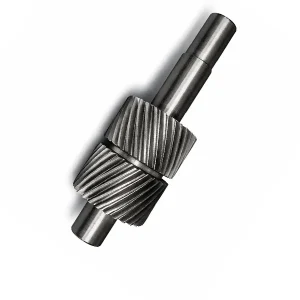
Rolling Mill Double Helical Gear — Split Assembly or Integral Herringbone
-
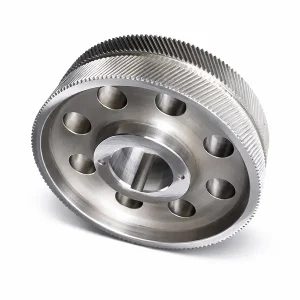
Industrial Double Helical Gears — 30° Helix Angle for Cranes, Fluid Pumps and Ship Propulsion
-

Heavy Machinery Double Helical Gear — Cast Steel Soft Tooth Flank, QT, ISO Grade 8–9
-
Double Helical Gears for Agricultural Machinery — Zero Axial Thrust for Farm Drive Systems
-

High Speed Train Locomotive Hard Tooth Flank Helical Gear — DIN Class 6 for Traction Drives
-
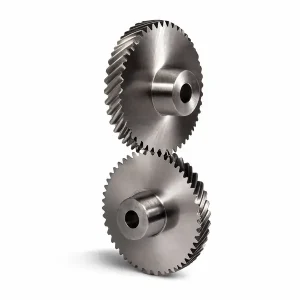
Crossed Helical Gear (Screw Gear) — Non-Intersecting Shaft Transmission with Flexible Axis Angles
-
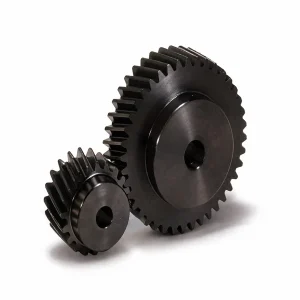
Ground Helical Gears — Precision-Ground 15° and 19°31′ for Smooth, High-Load Transmission
-
Double Helical Gear — Zero Axial Thrust for High-Torque Parallel Shaft Drives