Helical Gears in Food Processing and Pharmaceutical Machinery
A comprehensive engineering analysis of hygienic power transmission. Discover how precision kinematic geometries dictate thermodynamic management, acoustic stability, and absolute contamination prevention in highly regulated biological and chemical manufacturing environments.
Power Transmission Dynamics in Sanitary Environments
The mechanical demands placed upon drivetrains operating within the commercial food processing, beverage bottling, and pharmaceutical manufacturing sectors are uniquely contradictory. These precision machines must continuously deliver immense rotational torque to process heavy, highly viscous materials—such as dense industrial doughs, raw meat slurries, and specialized biochemical suspensions. Simultaneously, they must operate with surgical cleanliness, adhering strictly to global sanitary protocols mandated by the FDA, USDA, and EHEDG (European Hygienic Engineering & Design Group). These stringent frameworks dictate a zero-tolerance policy for chemical cross-contamination, lubricant leakage, or the shedding of microscopic particulate matter into the sterile processing environment.
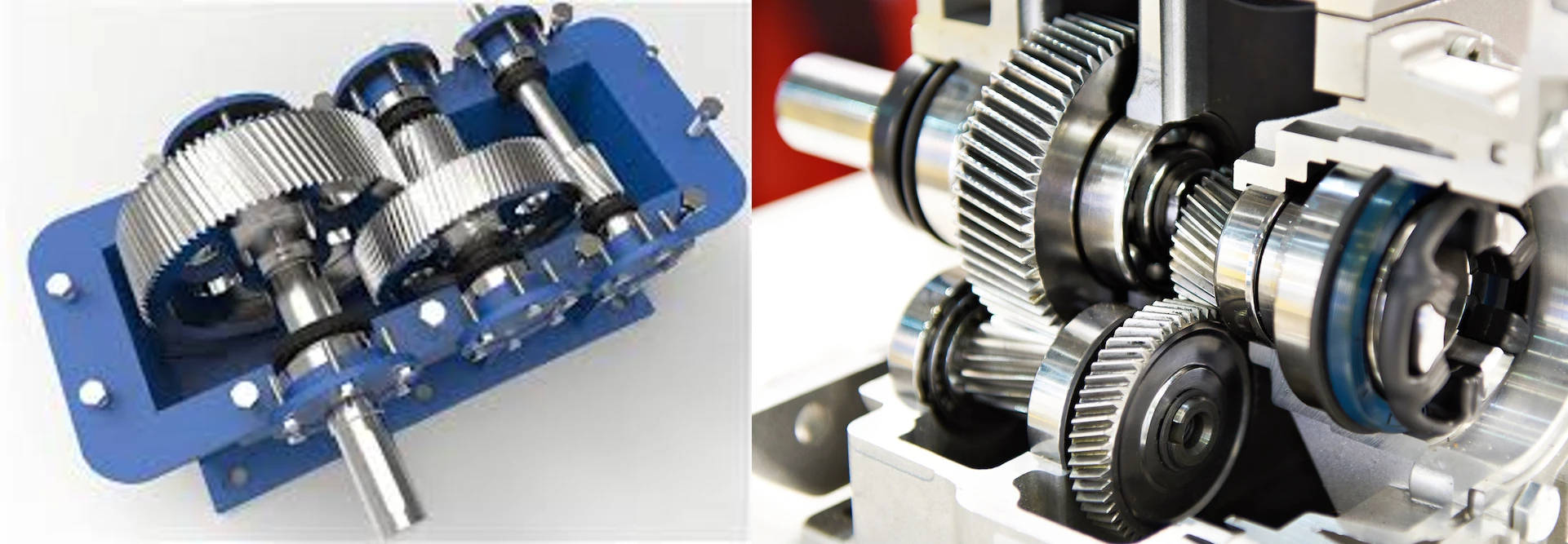
To successfully navigate these severe engineering paradoxes, facility designers predominantly rely on the highly specialized applications of helical gears. Unlike conventional straight spur gearing, which generates excessive kinetic vibration and destructive high-frequency acoustic resonance due to instantaneous tooth contact, a premium helical cut gear features teeth that are intricately machined at a mathematically precise incline. This fundamental helix angle initiates a progressive, sweeping mechanical engagement that ensures multiple gear teeth are securely sharing the dynamic biological load at any given microsecond. This elevated contact ratio dramatically minimizes internal shock forces, allowing the machinery to run exceptionally smoothly even under highly erratic mixing loads.
Furthermore, the inherent mechanical efficiency of an involute helical transmission—frequently exceeding 98.5% per reduction stage—virtually eliminates the generation of severe parasitic heat. This thermal stability is not merely an efficiency metric; it is a critical sanitary requirement. Excessive radiated heat accelerates the degradation of sensitive food-grade lubricants, dangerously expands internal atmospheric pressure, and ultimately forces toxic oil past the radial shaft seals, leading directly to catastrophic product contamination and expensive facility quarantines.

Technical Specifications for Hygienic Gear Units
To guarantee compliance with stringent FDA and EHEDG regulations, a helical gear reducer must be configured with highly specific metallurgical and chemical components that far exceed standard commercial industrial specifications. The following table outlines the rigorous criteria required for various food and pharma applications.

| Hygienic Specification Parameter | Food Extrusion & Heavy Mixing | Beverage & Meat Conveyance | Pharmaceutical Processing |
|---|---|---|---|
| Housing Metallurgy & Finish | Cast iron with FDA-approved antimicrobial white epoxy coating. | Solid 316L Stainless Steel, totally smooth un-finned body. | Electropolished 316L Stainless (Ra < 0.8 µm), completely crevice-free. |
| Ingress Protection Rating | IP65 (Dust-tight, low-pressure water resistance). | IP69K (Withstands high-pressure, 80°C washdown jets). | IP69K with advanced hermetic magnetic labyrinth sealing. |
| Internal Lubrication Standard | NSF H1 registered synthetic PAO gear oil (Incidental contact safe). | NSF H1 registered synthetic fluid, hermetically sealed for life. | NSF H1 / ISO 21469 certified, highly sterile cleanroom fill. |
| Output Shaft Elastomer Seals | Premium NBR (Nitrile Rubber) double lip configurations. | FKM (Fluorocarbon / Viton) highly resistant to caustic CIP foam. | FDA compliant FKM or frictionless PTFE labyrinth seal systems. |
| Gear Tooth Accuracy Level | DIN 3962 Class 6 (Standard industrial precision, high strength). | DIN 3962 Class 5 – 6 (CNC Form ground for pure rolling efficiency). | DIN 3962 Class 3 – 4 (Ultra-precision for zero backlash/vibration). |
Tribological Challenges: The Reality of NSF H1 Food-Grade Lubricants

To fully grasp why highly accurate meshes are mandatory in these sectors, one must deeply understand the chemical limitations of NSF H1 food-grade lubricants. In standard heavy industry, gear oils are heavily fortified with highly toxic sulfur and phosphorus Extreme Pressure (EP) additives. When microscopic metal asperities collide under high torque, these chemical additives react instantly to form a sacrificial metallic-soap layer, actively preventing destructive surface micro-welding and catastrophic gear failure.
Because of the inherent risk of incidental food contact, NSF H1 lubricants are legally barred from using these potent, toxic EP chemicals. They rely almost entirely on the base synthetic oil film (typically Polyalphaolefin or PAO) to separate the metal surfaces. Consequently, the boundary load-bearing capacity of an H1 lubricant is significantly lower than a standard industrial gear oil. If localized contact stress spikes too high on the gear flank, the sterile oil film will instantly rupture, leading directly to destructive metal-on-metal scuffing.
The geometry of a helical profile elegantly solves this chemical deficiency. By utilizing an extended overlapping mesh where multiple teeth continuously share the dynamic load, the maximum Hertzian contact stress on any single point is drastically reduced. The diverse applications of helical gears in this sector depend entirely on this principle of pressure dilution. This mechanical advantage ensures that even the chemically weaker H1 food-grade oil can successfully maintain a robust Elastohydrodynamic Lubrication (EHL) wedge, protecting the drivetrain for decades without toxic additives.
Overcoming Caustic Washdown and Thermal Cycling (CIP/SIP)
The Elimination of Cooling Fins
In dairy processing, meat packing, and liquid pharmaceuticals, equipment undergoes daily Clean-In-Place (CIP) and Sterilize-In-Place (SIP) routines. This involves blasting the machinery with 80°C (176°F) high-pressure water mixed with severe caustic chemicals (such as sodium hydroxide or peracetic acid) to obliterate biological pathogens. To pass IP69K washdown inspections, a sanitary gearbox must be constructed with a perfectly smooth, rounded exterior. It cannot feature the deep cooling fins typical of cast-iron industrial reducers, as these crevices instantly harbor deadly bacterial biofilms (Listeria, Salmonella).
Preventing the Siphon Vacuum Effect
If a highly inefficient gear type (like a sliding worm gear) is operating, the internal airspace of the gearbox is extremely hot. When hit with the cold or warm washdown spray, the sudden exterior cooling causes the internal air volume to rapidly contract. This creates a severe negative pressure vacuum inside the gearbox, which literally sucks the contaminated washdown water backward directly past the rubber lip seals and into the oil reservoir. Because the extensive applications of helical gears boast a 98%+ tribological efficiency, the internal operating temperature remains exceptionally cool. The temperature differential (Delta T) during washdown is minimal, eliminating the vacuum-siphon effect entirely and preserving the internal NSF H1 lubricant.
High-Torque Agitation: Industrial Mixers and Extruders
Processing highly viscous media—ranging from thick commercial bread dough and heavy protein extrusions to dense active pharmaceutical ingredient (API) slurries—requires formidable low-speed torque. The primary agitation drives and twin-screw extruders operating in these zones must overcome immense shear forces that fluctuate wildly as the rheology of the batch naturally changes during the gelatinization or cooking cycle.

Vertical Vat Agitators
In vertical bioreactors, the transmission is mounted directly above the open biological product. Any internal mechanical failure that shreds metallic particulate into the oil, followed by a subsequent seal failure, results in the immediate quarantine and destruction of the entire batch—a multi-million dollar catastrophe. By utilizing precision-ground helical cut gears, the internal kinetic energy is transferred with zero scuffing and no internal metal flaking, guaranteeing the purity of the housing interior even under heavy reversing loads.
Twin-Screw Food Extruders
For continuous twin-screw food extruders (commonly used for producing pastas, cereals, and pet foods), the back-pressure from the extrusion die forces immense axial thrust straight back into the drivetrain. To counter these catastrophic lateral forces while sustaining heavy torque, engineering teams frequently specify a double helical gear configuration. The mirrored herringbone architecture automatically cancels out the internal axial thrust mathematically, isolating the heavy extrusion pressure from the primary electric motor bearings and preventing premature mechanical collapse.
High-Speed Pharmaceutical Packaging and Pill Pressing
Within the pharmaceutical sector, rotary tablet presses must compress chemical powders into solid pills at mind-boggling rates, frequently exceeding 1,000,000 tablets per hour. The defining parameter is absolute volumetric consistency; a micro-gram deviation in active pharmaceutical ingredient (API) constitutes a severe FDA regulatory violation. Precision ground helical cut gears are mandatory here because they can be engineered with virtually zero mechanical transmission error (TE) and backlash.
This perfect kinematic synchronization ensures that the upper and lower compression punches align with absolute micrometer precision during every single rotational indexing cycle. Furthermore, the whisper-quiet operation of ground helical teeth prevents the transmission of high-frequency acoustic vibrations into the powder feeder hoppers. If vibration were present, it would cause the fine pharmaceutical powders to physically settle and densify within the hopper, altering the specific gravity of the fill and destroying the precise dosing weight of the final tablet.

Continuous Precision Transport: Sanitary Conveyor Networks
The circulatory system of any packaging facility is its extensive network of modular flat-belt and intralox conveyors. In high-speed glass vial filling operations or delicate beverage bottling lines, the physical movement of the conveyor must be absolutely fluid. Any microscopic pulsation or “cogging” effect from the drive motor translates into liquid spillage, compromised hermetic seals, and severe production bottlenecks.
Historically, plant managers opted for a low-cost worm gear reducer due to its compact right-angle footprint and natural washdown-friendly smooth casing design. However, the fundamental mechanical kinematics of a worm drive involves continuous sliding friction between the steel worm and the bronze gear wheel. This relentless sliding action causes microscopic particles of the bronze wheel to slowly shear away over time. In a highly regulated ISO Class 5 cleanroom environment, this inherent metallic shedding is a severe contamination vector.
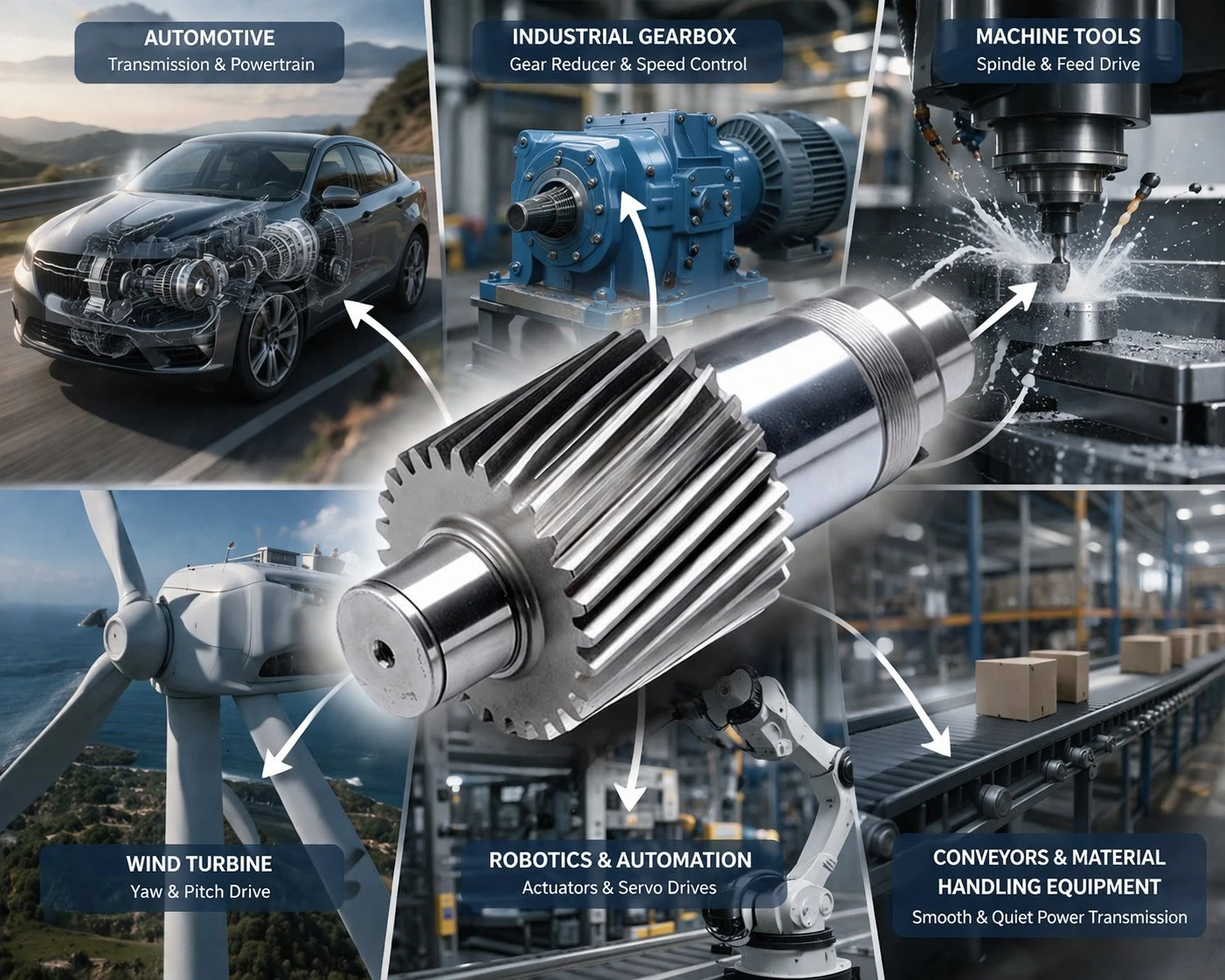
Implementing these specialized applications of helical gears ensures that the conveyor network operates without shedding metallic dust. Transitioning to advanced helical-bevel or multi-stage helical inline gearboxes solves the efficiency crisis entirely. The rolling kinematic mesh sustains a constant 98% efficiency, dramatically lowering the facility’s electrical overhead and providing the absolute zero-backlash precision required for synchronized robotic pick-and-place packaging systems.
Korea Ever-Power — Premium Sanitary Gear Drive Manufacturer
Engineering mechanical power transmission for the biopharmaceutical and commercial food processing industries requires uncompromising precision and deep metallurgical expertise. Operating globally as an elite helical gear manufacturer headquartered in South Korea, Korea Ever-Power Worm Gear Co.,Ltd delivers pristine, high-efficiency mechanical solutions that seamlessly pass FDA and EHEDG compliance audits.
- ■ HÖFLER Precision Grinding: To eliminate vibration that could compromise dynamic sealing, our engineers execute the final finishing of internal gear teeth on state-of-the-art German HÖFLER CNC machines, achieving an unparalleled DIN 3962 Class 3-6 geometric accuracy.
- ■ High-Alloy Core Integrity: While exterior sanitary housings may utilize 316L stainless steel, the power-dense helical internals are machined from premium vacuum-degassed 18CrNiMo7-6 steel. Deep-case carburization ensures they possess the core ductility required to absorb the heavy shock loads of thick paste extruders.
- ■ ISO 9001 Certified Quality: From the initial ultrasonic inspection of the forged blank to the final assembly with NSF H1 food-grade synthetic oil, our South Korean production floor maintains rigorous closed-loop metrology, utilizing Barkhausen noise analysis to detect any subsurface grinding burns.

Frequently Asked Questions
1. Are the internal helical gears made from stainless steel?
Generally, no. Austenitic stainless steel (like 316L) is exceptionally resistant to corrosion but lacks the carbon hardenability required to withstand severe multi-ton Hertzian contact stresses. For heavy torque transmission, the internal gears are fabricated from high-alloy carbon steels (carburized to 60 HRC). They are completely protected from the environment by the external 316L stainless steel gearbox housing and heavy IP69K dynamic shaft seals.
2. Why do pharmaceutical mixers specifically demand helical geometries?
Biopharmaceutical reactors and emulsion mixers must operate entirely without high-frequency vibration, which can destroy the delicate molecular bonds of certain active compounds or cause physical emulsions to separate prematurely. The highly engineered applications of helical gears provide a smooth, diagonal rolling engagement that is fundamentally smoother than straight gear variants, eliminating mechanical cogging and sustaining the acoustic and kinetic purity of the laboratory.
3. What does NSF H1 certification mean for gearbox lubrication?
NSF H1 is the globally recognized standard for lubricants deemed acceptable for “incidental food contact.” If a microscopic mechanical seal failure occurs and oil drips onto the conveyor, an H1-certified synthetic oil is non-toxic up to a concentration of 10 parts per million. Standard industrial EP gear oils contain severe toxic additives and heavy metals, which would trigger an immediate mandatory FDA recall of the entire production batch.
4. How does helical efficiency prevent bacteria growth?
Standard sliding gear reducers generate immense heat, frequently causing the exterior casing to operate at 50°C to 70°C. When organic food matter (such as flour or protein dust) inadvertently settles on this warm metal, it creates a perfect incubator for bacterial colonies (like Salmonella or Listeria). Highly efficient helical meshes generate almost zero heat; the gearbox casing remains cold, rendering the surface highly inhospitable to rapid biological reproduction.
5. Why are worm gears being phased out of food packaging lines?
In addition to running incredibly hot and wasting excessive electrical energy, the sliding friction of a worm gear continually wears down the internal bronze wheel, generating metallic dust. Over time, this wear creates internal mechanical “backlash” (slop in the gears). In modern automated bottling lines, sudden backlash causes the conveyor to jerk slightly during start/stop indexing, spilling liquids or causing glass bottles to collide and shatter on the belt.
6. What is an IP69K washdown rating?
IP69K is the absolute highest ingress protection rating available. It guarantees that the gearbox housing and dynamic shaft seals will successfully repel water sprayed at extreme high pressure (up to 1450 PSI/100 Bar) and extreme temperatures (80°C/176°F) from a distance of just a few inches. This is the minimum required rating for machinery deployed in raw meat, dairy, and pharmaceutical clean-in-place environments.
Secure Your Sanitary Compliance
Understanding the demanding applications of helical gears within sterile environments guarantees regulatory compliance, eliminates parasitic heat, and ensures continuous volumetric accuracy. Do not jeopardize a multi-million dollar pharmaceutical batch or food safety audit with inefficient, vibrating gear architecture. Partner with Korea Ever-Power for uncompromisingly precise, ultra-cool running, and flawlessly sealed power transmission solutions.
Editor: Cxm